I Didn’t Plan It, But It Didn’t Just Happen
I was going to be a teacher. My dad, David, was Chief Engineer at the MIT Plasma Science and Fusion Center, working on the Alcator C-Mod fusion reactor, and I had no intention of following him into engineering. Then he suggested I come work at the lab during my summer break. There I got a taste of big, audacious engineering, and that was that.
The hot warehouse
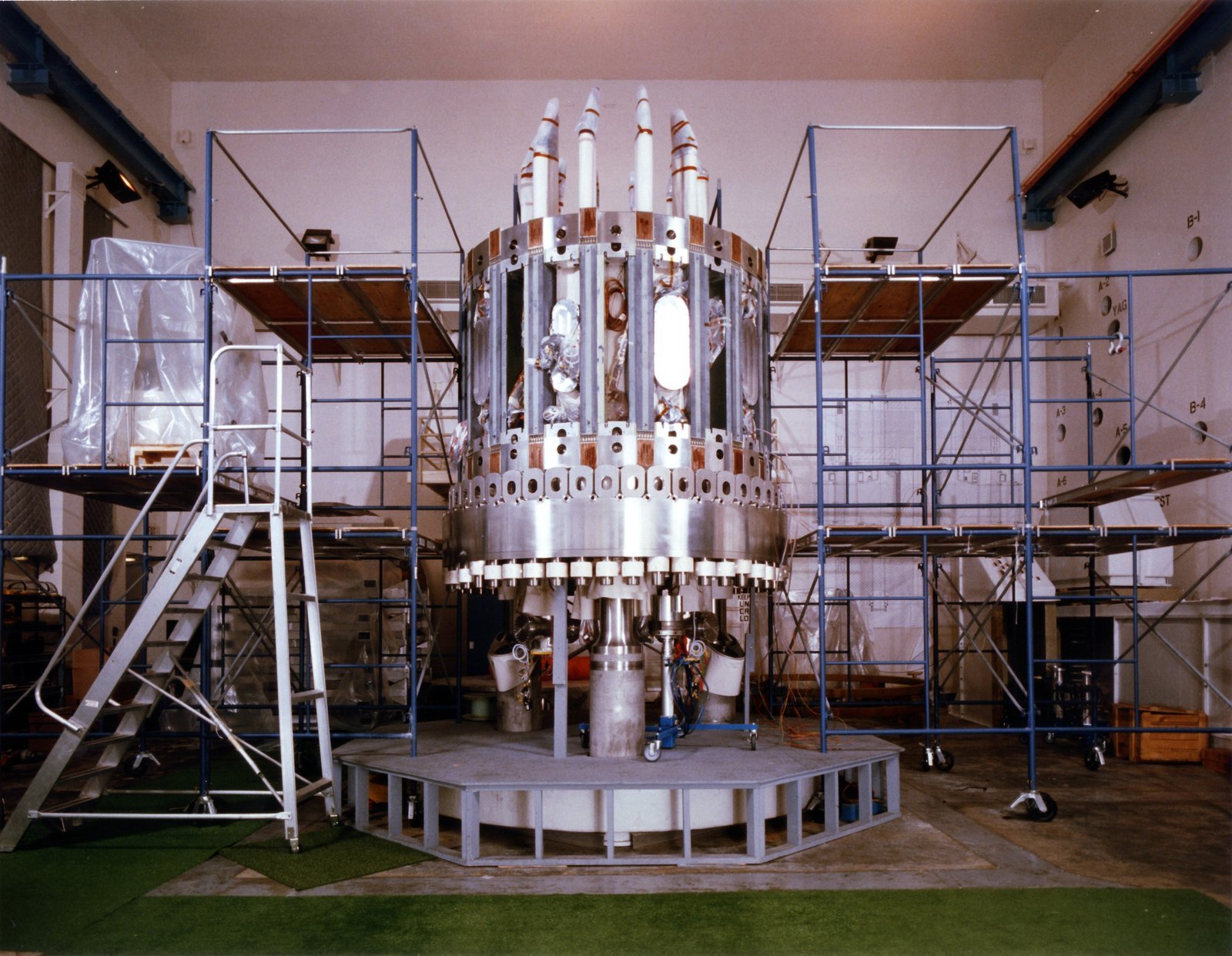
My college internship at the lab started with terrible jobs. My boss was Frank, an ornery old Portuguese guy in charge of all the technicians. My first weeks were spent cleaning and coating hundreds of feet of copper bus bar in a hot warehouse. It was dirty, hard work. My reward for finishing was more hard work: assembling hundreds of feet of surplus microwave coax, supposedly from an old radar facility in Alaska. It was heavy and awkward, I had no idea what I was doing, and I figured it out anyway.
All that taught me how to work hard. And Frank and I became friends once he realized he couldn’t beat me down with hard work.
Eventually I got to be part of the reactor assembly itself, even working alongside my dad on some critical assemblies. Learning to build complex things with my own hands still shapes my designs today. It gave me a clear sense of how my designs will work, or more importantly, how they won’t.
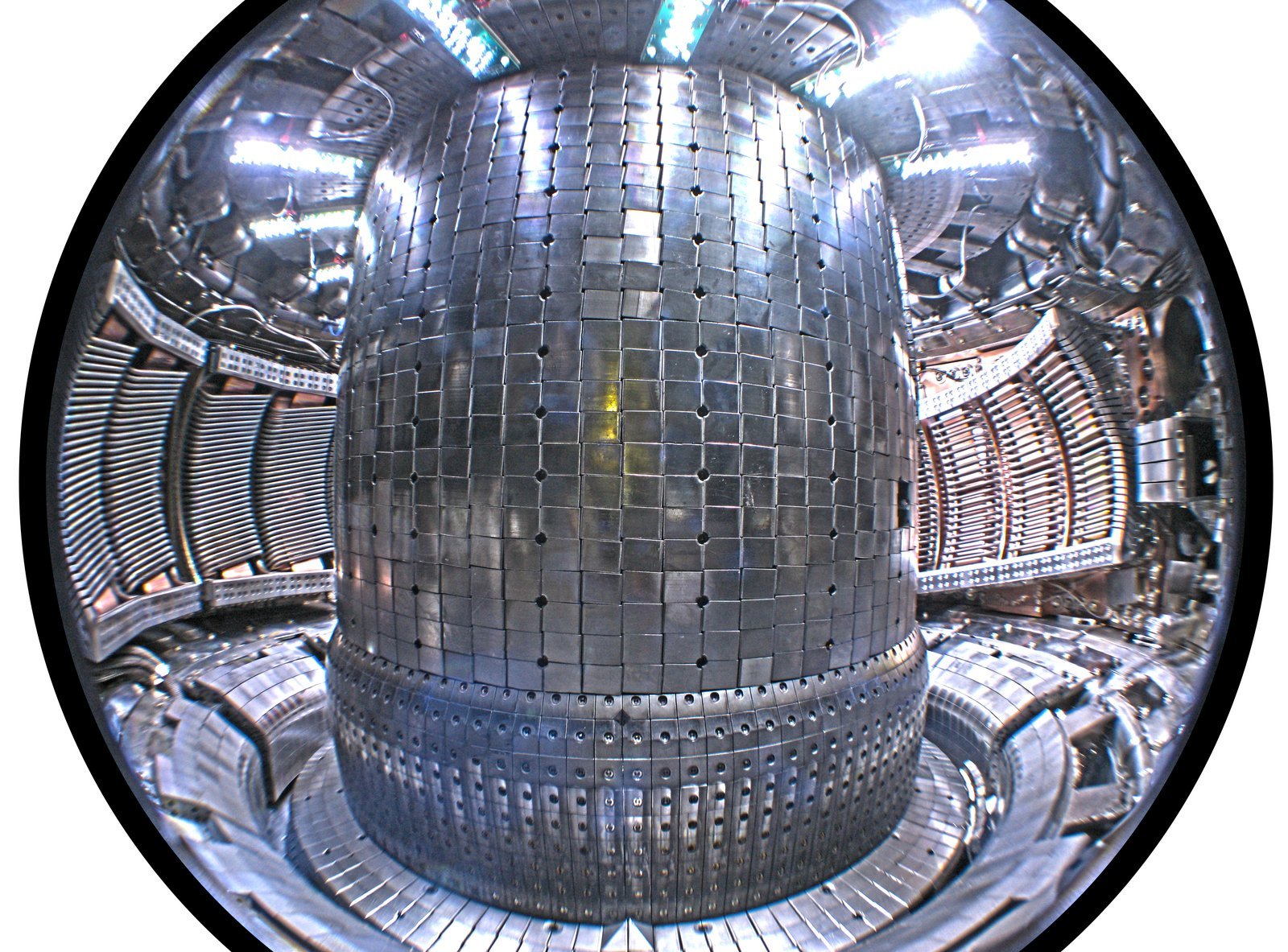
C-Mod was a compact tokamak, a donut-shaped fusion machine that used very strong magnets to confine its plasma. On its last day of operation in September 2016, it set a plasma pressure record that still stands. Some of the people who worked on it went on to found Commonwealth Fusion Systems, and C-Mod is in many ways the forerunner of the SPARC tokamak they’re building now.
Mentors and arguments
After college I spent a year as an engineer on C-Mod. Then a friend told me about an opportunity at Eaton Semiconductor (later Axcelis), which was building a flat panel ion implanter for TFT displays. There I worked for Adam Brailove, a great mentor who taught me to think through problems more deeply and to really use the physics I’d learned in school.
I also worked with Peter Rose, a famous figure in the ion implant world. In my first meeting with him, I argued with him. Afterward my boss asked, “Do you know who you were arguing with?” I had no idea. I think Peter appreciated the disagreement, because we worked closely after that.
Peter is often called the father of ion implantation, and he was a student of the more famous Van de Graaff. Peter founded Extrion in 1971 and later Nova Associates, which became Axcelis, and in 1996 he received the National Medal of Technology.
That project took me to Japan for the first time. I spent months at a Toshiba factory site and learned how to talk with customers. They kept asking me to stay. The product wasn’t a commercial success, though, and it was sold to Eaton’s Japanese partner, Sumitomo Eaton Nova.
Six months that turned into a career
In 1999 I interviewed at a startup called Epion. It wasn’t really clear what the job was, but they hired me. I honestly thought, “I’ll work here for six months until I figure out what’s next.” That was the beginning of my career in gas cluster ion beams.
What kept me there was the problem solving. No one had built this kind of equipment as industrial equipment before. There was so much to learn, and we had to discover all of it ourselves. Again I was blessed with a great mentor in Mike Mack – a seasoned ion beam physicist and generally great guy.
The ride wasn’t smooth. In 2001 we sold Epion to JDS Uniphase for $250 million, because our technology had improved their yield on DWDM optical filters – critical to them at the time. That was just weeks before the telecom crash. Two years later, Epion bought itself back for $25 million. JDSU just didn’t need us anymore. We spent a few hard years trying to break into semiconductors and explored a lot of applications, including ultra shallow junction doping, which became my process focus.
TEL bought us in 2006. We kept selling equipment for semiconductor-adjacent applications, but nothing core really landed until we released Acrevia. Acrevia uses a gas cluster beam to fine-tune the size and shape of the tiny patterns printed by EUV lithography, after the etch step, with very little damage. Seeing that happen has been deeply satisfying, in no small part because one of the competing products was led by a former Epion colleague I really respect.
Family and Work
In all of this, it wasn’t just me. This was a journey that Deane and I took together. It was never my job, my paycheck, my career. It was ours. It was our partnership in all of it that made it work. Our partnership in work and parenting and serving. Without Deane… none of this would have happened.
What I’d tell a young engineer
I didn’t plan my career. But it didn’t just “happen” either. It grew because I didn’t let problems intimidate me. I broke them down. I let the science lead. I was willing to ask “what if?” And maybe most importantly, I didn’t wait to be asked. I just dove in.
Related
- How the Alcator C-Mod tokamak blazed the CFS trail to fusion power (Commonwealth Fusion Systems)
- Peter Rose: Father of Ion Implantation (Chip History Center)
- Peter H. Rose, National Medal of Technology laureate (National Science and Technology Medals Foundation)
- TEL announces Acrevia (Tokyo Electron)
For patents and inventions, see the Patents page.